


CPR (no breathing, no pulse)
Small dogs: use one hand; large: both hands over chest.
Stop when breathing returns or a vet takes over.
This is a code block. You can edit this block using the source dialog.
This is a custom code block. To edit, select this block and click the Settings button.
Quick protocols for common emergencies. If your pet is not breathing, bleeding heavily, or seizing, act now and call a veterinarian.
Stop when breathing returns or a vet takes over.
Normal temp: 100–102.5°F (37.8–39.2°C)
Pulse: 70–140/min • Resp: 10–30/min
Temp: 100–102.5°F (37.8–39.2°C)
Pulse: 140–220/min • Resp: 20–30/min
Information is for first aid only and does not replace professional veterinary care. When in doubt — call a vet.
Common Questions !
1️⃣ How often should I take my pet to the vet?
At least once a year for a routine check-up. Puppies, kittens, and senior pets should visit more often — every 6 months.
2️⃣ What’s the best food for my dog or cat?
Choose food by age, size, and activity level. For special diets (allergies, kidney, or weight issues), always ask your vet.
3️⃣ How do I know if my pet is sick?
Watch for signs like loss of appetite, unusual tiredness, vomiting, coughing, or behavior change. When in doubt — visit a vet.
4️⃣ How can I make my pet feel safe at home?
Give them their own quiet space, routine feeding times, and toys to reduce stress.
5️⃣ What should I do if my pet eats something toxic?
Don’t wait — call your vet or a 24/7 emergency clinic immediately. Bring the packaging or photo of what they ate.
6️⃣ Can my dog and cat live together?
Yes! Start with short, supervised meetings and reward calm behavior. Patience is key.
7️⃣ How do I keep my pet’s teeth clean?
Brush regularly with pet toothpaste and offer dental treats or toys.
8️⃣ How to help my pet during fireworks or storms?
Close windows, turn on calm music, and stay nearby. Avoid scolding or forcing — comfort helps the most.
It happens in a blink. One minute you’re cleaning up a broken jar, and the next your dog swoops in like a furry vacuum. Before you can react, you’re left wondering if they just swallowed glass… and what on earth to do ne…
It happens in a blink. One minute you’re cleaning up a broken jar, and the next your dog swoops in like a furry vacuum. Before you can react, you’re left wondering if they just swallowed glass… and what on earth to do next.
Glass ingestion is definitely one of those pet parent heart-stopping moments. The risks can range from mild to life-threatening, and knowing what to expect can help you act quickly and confidently. In this guide, we’ll walk you through the potential dangers, what signs to watch for, and the steps vets take to help dogs who ingest glass.

Believe it or not, there are rare cases where smooth pieces of glass travel through the digestive tract and come out the other end without causing significant harm. This tends to happen when the ingested pieces are more like rounded or smooth-edged fragments.
A dog might experience some mild abdominal discomfort, but the glass can pass naturally. Still, because you can’t know whether the glass is smooth or sharp, you should always consult your vet.
A shard of glass may lodge in the esophagus before it ever reaches the stomach. This is extremely uncomfortable and often triggers symptoms like drooling, gagging, coughing, vomiting, or even bringing up blood.
A dog with esophageal obstruction may refuse food or water. In some cases, complications inside the chest cavity can develop, such as mediastinitis or pneumothorax. If you see these signs, veterinary care is urgent.
If glass makes it into the intestinal tract, it can slice the delicate inner lining. These cuts are painful and create pathways for infections to develop.
You may notice signs of internal bleeding, such as blood in the vomit, blood in the stool, or dark tarry feces that indicate digested blood. These symptoms deserve immediate attention.
Sharp shards can be pushed through the stomach or intestinal wall as these organs move. When this happens, digestive fluids, bacteria, and food leak into the abdomen, triggering severe inflammation known as peritonitis.
If bacteria are involved, it becomes septic peritonitis, which is extremely serious. Dogs may show abdominal pain, fever, or fluid buildup in the belly. Complications like sepsis and systemic inflammatory response syndrome can follow quickly.
Glass can slice into blood vessels at any point during digestion, causing internal bleeding. Depending on where the vessel is damaged, bleeding can occur into the gut, abdomen, or chest.
Dogs experiencing blood loss may develop pale gums, rapid breathing, or an elevated heart rate. These symptoms require immediate veterinary care.

Because glass shows up clearly on X-rays, your vet will usually begin with imaging. This helps determine how much glass is present, how large the shards are, and where they’re located.
Once the vet understands the situation, they’ll recommend the safest and most effective treatment plan.
In some cases, especially when the glass appears small and less sharp, your vet may advise allowing it to pass on its own. A high fiber diet can help bulk up the stool, padding the shards and making movement through the digestive tract a little safer.
Most foreign material moves through within one to two days, though it can sometimes take longer.
If the glass is still in the esophagus or stomach, endoscopy is often the preferred method. During this procedure, your dog is placed under anesthesia while a flexible device with a camera and grasping tools is guided down the throat.
Endoscopy can retrieve the glass without major surgery, making it a less invasive option.
If endoscopy isn’t possible or the glass has traveled beyond the stomach, surgery may be required. Surgery carries more risk and requires a longer recovery, but it is sometimes the only safe way to prevent perforation or remove dangerous shards.
When compared to the consequences of untreated intestinal perforation, surgical removal is the safer path.

When your dog eats glass, it’s alarming, but you don’t have to face the situation alone. A vet can determine exactly where the glass is and choose the safest way to help your dog.
With quick action and proper medical support, most dogs recover well. Trust your instincts, stay calm, and get your pup the care they need.
Feature Image Credit: Gismo2015, Shutterstock
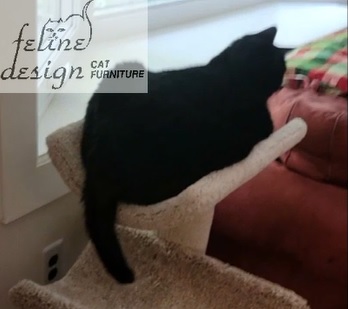
Have big kitty? Feline Design makes furniture large cats love! The post Cat Furniture for Big Cats appeared first on Modern Cat.…
Sponsored by Feline Design Cat Furniture
If you have a larger cat, you know that a lot of cat furniture just doesn’t support our larger feline friends. Tommy “Catman” Westerhold, the founder and owner of Feline Design Cat Furniture, talks big cats and furniture picks made to support heftier kitties.
A: Not necessarily, but people seek us out because they have larger cats, and our stuff will suit their needs. Bigger cats are comfortable using our stuff.
A: Oh, 15 or more pounds, I’d say. Like a Maine Coon, a Bengal, Ragdoll – even the giant Savannah! Our own two cats, Stormy & Misty, tip the scales at 18-19 pounds. When I started the company, I had a part Maine Coon named Eddie who was easily 20 pounds. If Eddie couldn’t use it, or if he tipped it over, it went back to the drawing board before it was added to the line.
A: It depends upon which cat activity a customer is wanting to improve upon. For scratching, any post from 24″ tall, on up to our massive 5 foot sisal post, the B60TR. If the cat wants to have a perch/bed to jump up to after having a good, satisfying scratch – maybe to gaze out the window – I recommend anything from a simple pedestal with a square platform on top, to a post/bed combination, like our Willow’s Nest. Or maybe one of our multi-level cat trees with curved perches.
A: Yes, that’s right. They are generally a cradle-like bed that is 16 to 21 inches long, and finished in heavy duty, good old America made carpet. This curved perch is a favorite style of many cats all over the world. But we’ve got several beds that are equally as nice.
A: Many do, yes. And others have just one very fortunate kitty who gets a whole lotta love ( & stuff to enjoy)! I recently saw a very attractive woman at an event holding a very homely hairless cat and it sure looked like that cat was satisfied. I think his name was Tommy, as a matter of fact!
A: It’s made here in the United States of America. I consider an American made product is one that is made using American labor, and supporting American families. Canada is also in America. So I would include them in this assessment. I don’t mean to buy into this wacky “51st state” nonsense. I just mean that we down here don’t own the name “America”.
A: It’s built using very high quality materials, and designed to outlive generations of cats – & humans in many instances. Plus, we choose a box after the cat furniture is designed – not the other way around (like the foreign made product).
A: We do ship some of our designs in 2-3 pieces, with simple, easy to follow (and easy to understand!) instructions – as opposed to the Chinese made cat trees, which are designed to fit neatly in a small box, and not primarily to suit the needs of the cat or its human companion. The Chinese cat trees that you need to take a weekend to build are fine. Many are even useful and some are actually attractive. But they are made with materials that will break down or wear down rapidly.
But getting back to the “big cat” thing – you often see these other cat trees advertised with very small cats or kittens siting on them, It makes these cat trees appear larger and more useful than they really are once they are assembled. Sadly, many of these other cat tree vendors don’t even offer spare parts for their cat trees.
Incidentally, we do have a company – cattreeparts.com – that will make you a component for your Chinese made cat tree after a part fails, and ours will perform much better than the new part…..
A: This all depends upon what that cat wants to do. If he wants to sleep, then any of our beds would work. If she wants to scratch, we do offer a wide variety of sisal rope scracthing posts, but we do sell carpeted ones, too. Even Berber carpet! If that cat has a wide variety of activities that need to be addressed, then if you held my feet to the fire, I would probably go with our CGN or CG2PN. Both of them have a couple of beds and a nice tall sisal rope post to rip away at.
A: You’ll pay more for ours up front, vs. buying these other cat trees which will need to be replaced 2 or 3 times – or more – while a cat is enoying someone’s original Feline Design purchase. We often see a cat customer coming back 20-30 years after buying one of our cat designs, and wanting to get a fresh, new one to replace the one they have that has gotten to look a little shabby but is still serving their cats’ needs!
The landfills are full of broken down cat trees that were cheaply made in China, while ours are sitting proudly in someone’s den or living room with their cat snoozing away or scratching away at it.
It’s really a matter of one’s budget, and of one’s perspective on our “disposable” culture. I hate to use an overused phrase, but in this case, it’s just so true that “You Get What You Pay For”.
For more articles like this, be sure to check out our Cat Care and Cat Life pages.
The post Cat Furniture for Big Cats appeared first on Modern Cat.